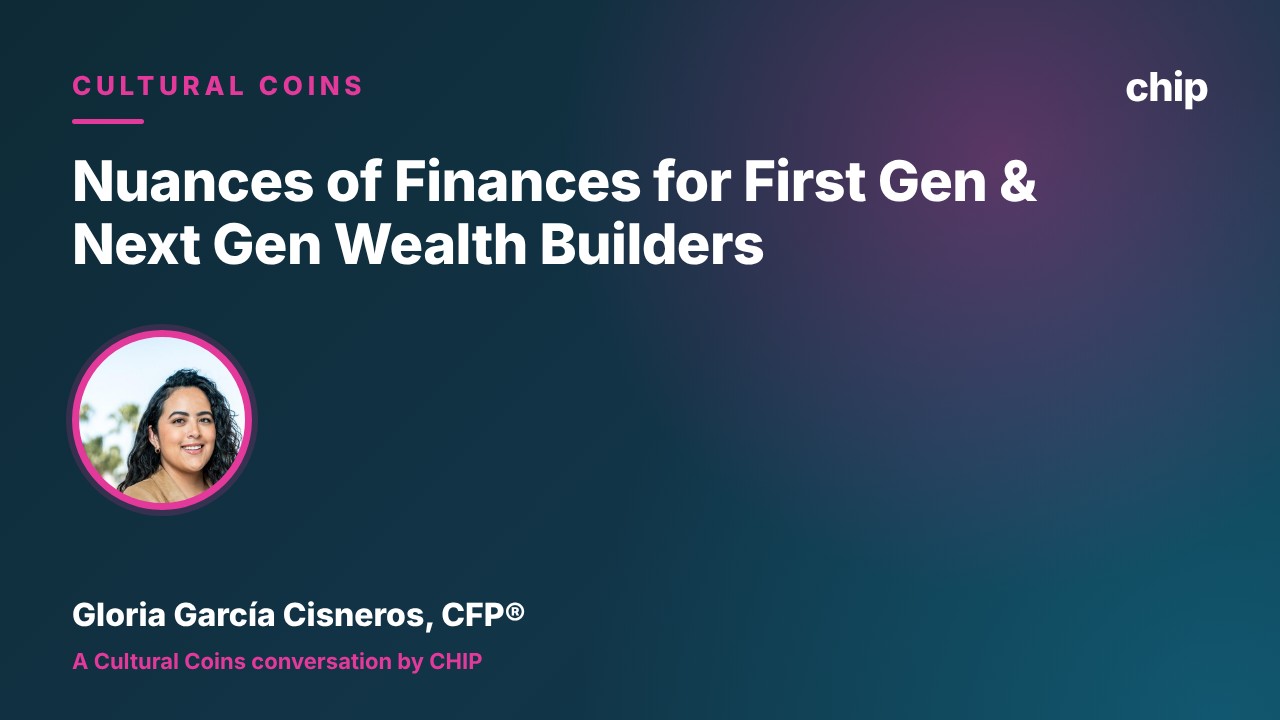
Nuances of Finances for First Gen or Next Gen Individuals with Gloria Garcia Cisneros
Being the first in your family to build wealth, often called first-gen wealth, comes with its own pressure. So does being the next one to carry it forward. In this Cultural Coins conversation, Dana Wilson talks with Gloria García Cisneros, a Certified Financial Planner born in Mexico and raised in Southern California, who spends her “five to nine” helping women of color, Latinos and Spanish-speaking families change the stories they were told about money.
Key takeaways
- First-gen wealth builders are usually building for many people, not just themselves.
- Start with grace. If you had it all figured out, you wouldn’t be the first.
- Inherited wealth lasts only if the values and money skills get passed down too.
- Culture shapes what we believe about money, so name those beliefs before you act on them.
- Small gifts and small steps count. Doing nothing changes nothing.
First-gen wealth starts behind the start line
For first-gen families, Gloria says, money isn’t just taboo. It’s deeply unspoken. She remembers her first job: she didn’t negotiate, didn’t understand her benefits or 401(k), and picked credit cards based on myths she’d heard growing up. Many first-gen earners start behind.
There’s a strength in it too. First-gen folks tend to be resourceful and know what “enough” looks like. That scrappiness helps in uncertain times, and it makes it easier to see your real surplus.
Building first-gen wealth for many
“We’re usually not building for one,” Gloria says. You may be helping your parents retire, saving for your own retirement and trying to set up the next generation, all without a trust fund or a rich uncle to fall back on. One of her favorite reminders: just because you carry it well doesn’t mean it isn’t heavy.
That weight can show up as burnout, a scarcity mindset, extreme frugality or a fear of investing, even after you’re financially okay. Her advice: give yourself grace, take things one at a time and remember you can’t pour from an empty cup. That’s hard in immigrant families, where putting family first is the norm, but it’s necessary.
What next-gen inheritors get wrong
If you don’t know how your parents built their wealth, it’s easy to assume money comes easily and that a windfall means you’re set. It doesn’t. Gloria prefers the term legacy planning because it includes the values behind the money. Heirs also need financial fluency for today’s world, including taxes, inflation and student debt. Without it, wealth often runs out by the third generation.
How culture shapes money beliefs
Our culture teaches us what’s right, what’s shameful and what’s possible with money, often without a word said. Gloria points to beliefs common in Latino and immigrant families:
- Distrust of financial systems, often carried from countries with unstable economies. It’s a valid starting point, not an irrational one.
- “Money corrupts.” Gloria sees it differently: money amplifies who you already are.
- Men manage the money. Many women she works with feel they aren’t allowed to have a say, especially if they aren’t the main earner.
To help women build confidence, Gloria starts by giving them permission to have thoughts, feelings and goals about money. The tools your parents used may have fit their situation, but you’re in a different place now. “We have a relationship with money whether we like it or not,” she says, “so we might as well make it a good one.”
What works with first-gen and next-gen clients
Gloria leads with life planning: what matters most to you, and why. Next-gen clients appreciate a plan that feels made for them. First-gen clients feel less judged when they get to shape the story. For advisors, her advice is simple: listen to understand, avoid assumptions and stop talking long enough for people to share what they came to say.
Small steps that grow first-gen wealth
“Doing nothing will change nothing,” Gloria reminds families. Planning doesn’t have to start with trusts and complex strategies. It can start with a will, or with setting aside $100 to help a niece buy books for college. Dana adds that small gifts build the habit, and next time the goal can grow.
Gloria’s closing advice: it’s okay not to know. Get real about where you are, take one step at a time and invest in yourself, whether that’s $5 into savings, $50 into your 401(k), a book or a business. “We’re not just doing this for us,” she says. “We’re doing this for everyone that comes after us.”
Want more conversations like this? Watch more Cultural Coins episodes.
This article is for education only and isn’t financial advice. Talk with a qualified professional about your situation before making decisions.
Your next step
- Take the free 3-minute Prosperity Matrix™ quiz to find your money archetype and financial season.
- Get matched now with a Black, Hispanic or multicultural CFP, financial advisor, CPA or estate attorney who understands your culture.