Wealth Building 101 with BES
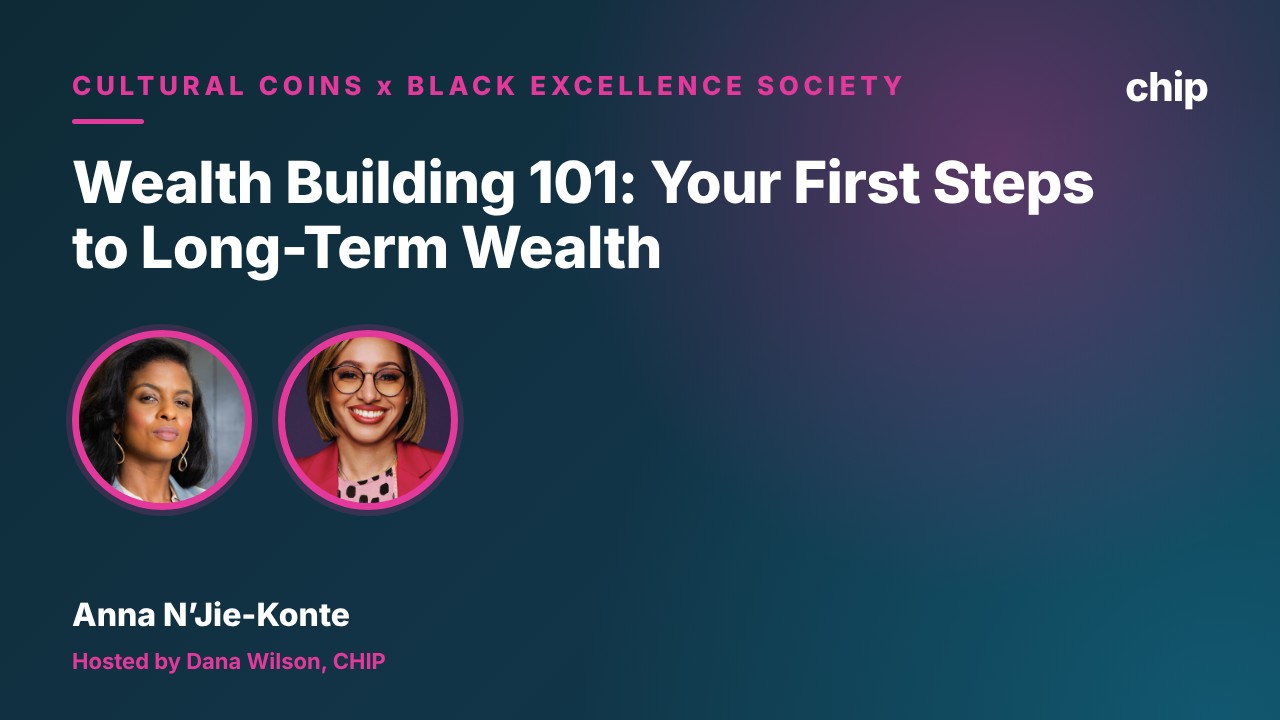
New to building wealth, or want a clear place to start? This Wealth Building 101 session, presented with the Black Excellence Society (BES), kicked off CHIP’s financial series. Dana Wilson hosts Anna N’Jie-Konte, a wealth advisor and founder of a firm that helps women of color invest and grow their wealth. Anna grew up in New York City with parents working two and three jobs, and she spent her first decade in wealth management learning how people with eight- and nine-figure net worths think about money. Now she shares that mindset with the rest of us.
Key takeaways
- Your thoughts about money drive your feelings, your actions and your results.
- Build wealth like a pyramid: protect first, then grow, then enjoy.
- Positive cash flow, a 3–6 month emergency fund and the right insurance are the foundation.
- Investing early can matter more than rushing to buy a house.
- Know your number, then give yourself permission to live.
Wealth building starts with your money mindset
Before any tactics, Anna starts with how we think. A thought like “debt is bad” creates anxiety. That anxiety can make you avoid your accounts, give up and overspend, or throw everything at debt while ignoring the rest of your finances. The result, like late payments and a lower credit score, then “proves” the original thought. One of her mentors compares an unexamined mind to a toddler running around with a kitchen knife.
Anna shared a personal story. Her aunt tracked every dollar she spent in composition notebooks and never took the simple trips she dreamed about, even though she had a paid-off house, a pension and Social Security. She also described a successful client who grew up poor and couldn’t say no to her kids, spending thousands a month while under-saving for her own retirement.
Try this: Write down your money memories, from your earliest to now. For each one, ask what you made it mean and how it shows up in your habits today. You may be surprised by what you find.
The wealth building pyramid
You can’t build a pyramid from the top down. Anna sees people get into trouble when they try advanced strategies before the basics are in place.
1. Protect
- Positive cash flow: spend less than you earn and set aside a planned amount every month, even if it’s $50. Anna’s first salary was $25,000, so she knows it’s about the habit.
- Emergency fund: total your bare-minimum bills (housing, minimum debt payments, groceries, utilities) and keep 3–6 months in a separate high-yield savings account.
- Insurance: term life insurance once someone depends on you, and long-term disability insurance, which is cheaper the younger you are.
- Further along? Revisit your coverage, consider long-term care insurance, update your estate plan with a revocable living trust and check your asset protection, including umbrella coverage on rentals.
2. Grow
Investing has never been cheaper or easier to access. Anna suggests contributing 10–15% to your 401(k) plus any employer match, and adding a Roth IRA if you’re eligible. Starting early bought her the freedom to leave a well-paying job and start her own firm.
Her countercultural take: you don’t need to rush to buy a house. Saving a 20% down payment can take years, especially in high-cost cities. Investing that money monthly and keeping your costs low can leave you wealthier in the long run. You can always buy later.
For parents, open and monitor a 529 plan early, and shift it to more conservative investments as college gets closer. Check your retirement readiness, and as costs like childcare drop, put the extra cash to work.
3. Enjoy
“Invest aggressively, but live aggressively too,” Anna says. She worries about young people giving up their lives to save every dollar. For people in their mid-40s and up, she recommends Die with Zero by Bill Perkins: the goal isn’t the biggest balance, it’s a fulfilled life and time with the people you love while they’re here.
Her simple framework: know what you need for your future. If you’re on track, enjoy yourself. If you’re not, adjust, and still enjoy yourself along the way.
From the Q&A
- Budgeting tool: Anna likes Monarch Money for tracking spending and net worth based on what you actually spend.
- Advisor vs. planner: titles matter less than how someone gets paid. If a professional keeps steering you toward one product, ask more questions.
- Living your own way: set boundaries, step back and decide what you want, whether that’s a smaller wedding, renting or a life that doesn’t follow the usual script.
Want more conversations like this? Watch more Cultural Coins episodes.
This article is for education only and isn’t financial advice. Talk with a qualified professional about your situation before making decisions.
Your next step
- Take the free 3-minute Prosperity Matrix™ quiz to find your money archetype and financial season.
- Get matched now with a Black, Hispanic or multicultural CFP, financial advisor, CPA or estate attorney who understands your culture.