Moms + Money: Financial Planning for Every Stage of Motherhood
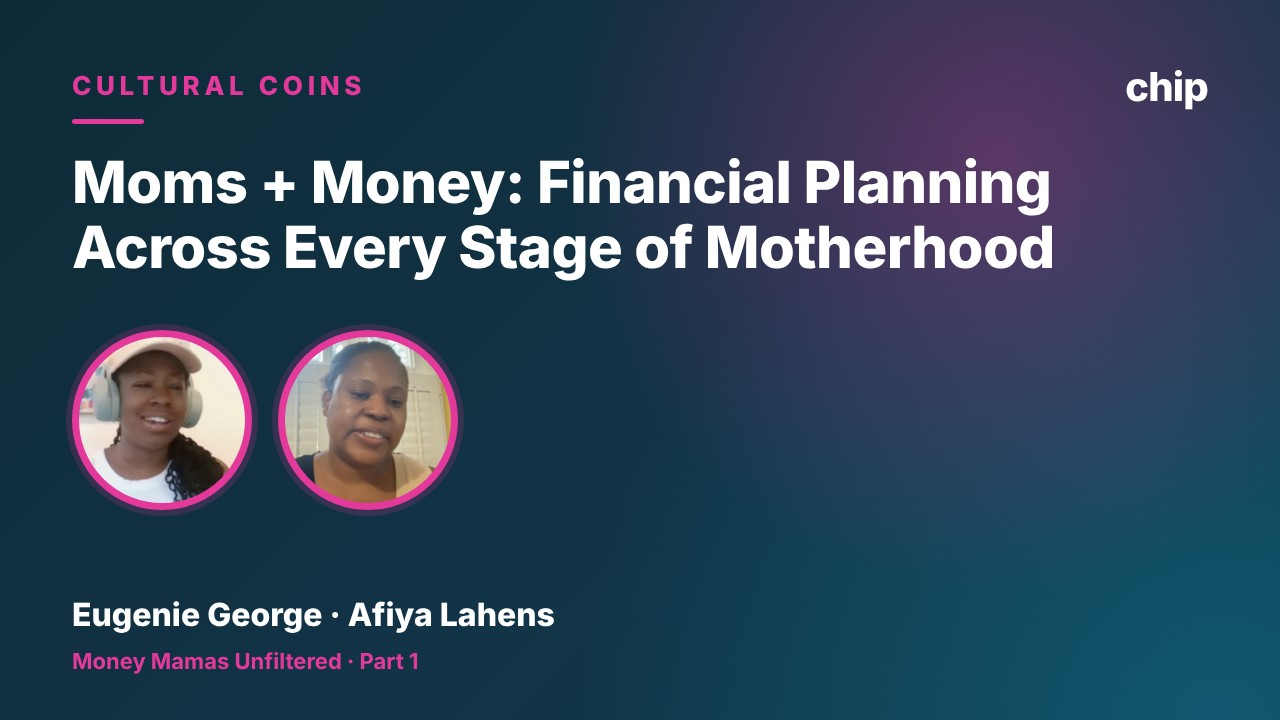
What does financial planning for moms look like when the money lessons you grew up with don’t fit the life you’re living? In this Cultural Coins episode, CHIP’s head of content and strategy, Eugenie George, and mindset coach Afiya Lahens compare notes on raising kids across different generations, rewriting old money stories and the tools that can take some pressure off.
Key takeaways
- Financial security and wealth are two different goals. Name both.
- Your money mindset can shift a lot between your first child and your last.
- Talk about money with your kids, even when you’re still learning yourself.
- Childcare benefits, 529 plans and free local programs can stretch your budget.
- Ask your network what they’re doing. Those talks feel awkward but pay off.
Security vs. wealth
Afia separates the two. Financial security means a roof over her kids’ heads, food on the table and a path forward once they leave home. Wealth means they can try the things she didn’t get to do growing up. Eugenie admits she has often lumped the two together. For her, wealth now means being able to explain each investment option to her kids in plain terms, from stocks to a 529 plan.
They also notice how much the money conversation changes from one generation to the next. With Eugenie’s oldest, the message was “stay in school.” Her younger kids hear more about entrepreneurship and side businesses. Schools are adding financial literacy programs too, so some kids already know more than their parents expect.
How motherhood changes your money mindset
Afia was young when she had her first child and still building her career. She describes a scarcity mindset back then. Much of her money went to after-school programs, tutoring and sports, and less went to savings. With her youngest, her focus has moved toward legacy and saving. Having made it through harder seasons, she knows she can manage, and that takes away some of the fear.
Eugenie had her first biological child later in life, and pregnancy flipped a switch. Suddenly she was focused on earning more and planning ahead. Some things are non-negotiable for her now, like opening a 529 plan, which can cover college, graduate school and some certifications.
Money lessons they’re teaching their kids
Afia wants more open money talks than she had growing up, even when the answer is “I don’t know, let’s learn together.” She also wants her kids to make money choices from knowledge instead of fear.
Eugenie, a former math teacher, walks her kids through the real cost of college. Tuition is only the start. Add housing, food, health insurance and everyday spending, and the total can be many times what teens expect. With her 12-year-old, she’s already planning for dual enrollment, so high school students earn community college credits and cut costs later.
Support that makes a difference
Both moms point to childcare as the biggest strain. Afia says planning summer camp is a puzzle she starts in January and still hasn’t solved by June. Here are a few tools they mention:
- Workplace benefits. Some employers offer cafeteria plans that let you pay for childcare with pre-tax dollars. Check your benefits guide.
- 529 plans and state programs. Some states add money to a child’s education savings. Look up what your state offers.
- Free and low-cost programs. Libraries, community groups and volunteer roles can open doors to activities you couldn’t otherwise afford.
- Your network. Ask friends what they’re doing. One of Eugenie’s friends had set up trusts for her kids, which she hadn’t even considered.
That’s also why CHIP exists. When you’re ready to go further, a financial team that shares your values can help with college savings, estate planning and taxes.
Want more conversations like this? Watch more Cultural Coins episodes, including part two, Parenting, Power & Paychecks.
This article is for education only and isn’t financial advice. Rules for 529 plans and childcare benefits vary, so talk with a qualified professional about your situation before making decisions.
Your next step
- Take the free 3-minute Prosperity Matrix™ quiz to find your money archetype and financial season.
- Get matched now with a Black, Hispanic or multicultural CFP, financial advisor, CPA or estate attorney who understands your culture.